Tu Duc Tomb Hue: How to Experience the Most Poetic Royal Tomb in Vietnam
Explore Tu Duc Tomb in Hue, Vietnam’s most poetic royal tomb, with travel tips on history, architecture, and how to experience it beyond sightseeing.
Among the many royal tombs scattered across Hue, Tu Duc Tomb stands out for its quiet elegance and emotional depth. More than a burial site, it feels like a retreat designed for reflection, poetry, and solitude, revealing a softer, more human side of Vietnam’s imperial past.
Where Tu Duc Tomb Hue Is and Why It Feels Different From Other Royal Tombs
Where Tu Duc Tomb Hue IsTu Duc Tomb is located about eight kilometers southwest of Hue’s Imperial City, nestled among pine trees, lakes, and gentle hills. The journey there already sets the tone. Roads become quieter, greenery thickens, and the atmosphere gradually shifts away from urban life.
Unlike other royal tombs built mainly to honor power and authority, Tu Duc Tomb was designed as a living retreat long before it became a resting place. Emperor Tu Duc, known for his poetic soul and introspective nature, envisioned this complex as a second palace where he could escape court life, write poetry, and contemplate existence.
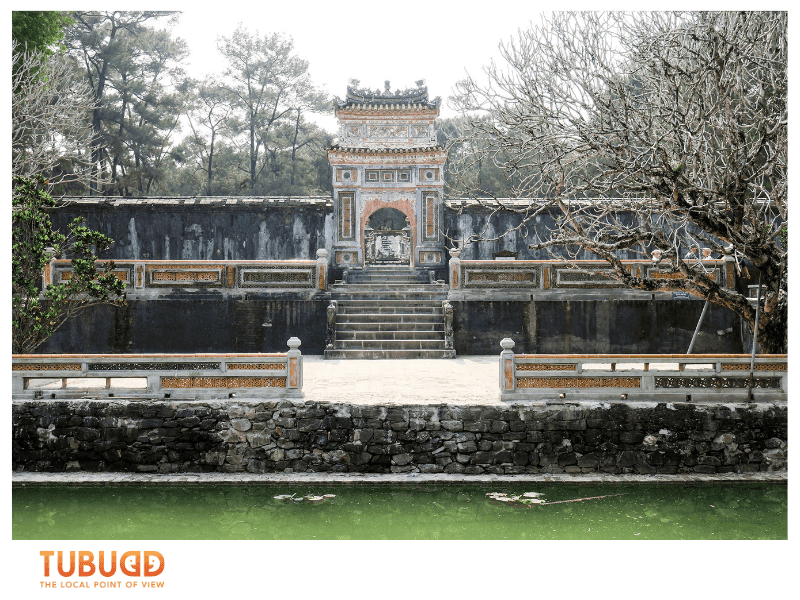
This intention explains why Tu Duc Tomb Hue feels more like a landscaped garden than a mausoleum. The layout is spacious, harmonious, and deeply connected to nature. Lakes mirror the sky, stone paths wind gently through trees, and buildings blend seamlessly into the environment.
For travelers, this creates a very different emotional experience. Instead of awe through grandeur, Tu Duc Tomb invites quiet observation. You don’t rush from structure to structure. You slow down, walk, and absorb the atmosphere, almost as if the place asks you to move at its pace.
What to Explore Inside Tu Duc Tomb Hue
What to Explore Inside Tu Duc Tomb HueTu Duc Tomb Hue is a large complex, and exploring it feels like unfolding a story rather than checking off landmarks. The main areas include ceremonial halls, courtyards, lakes, and the emperor’s burial site, each carrying symbolic meaning.
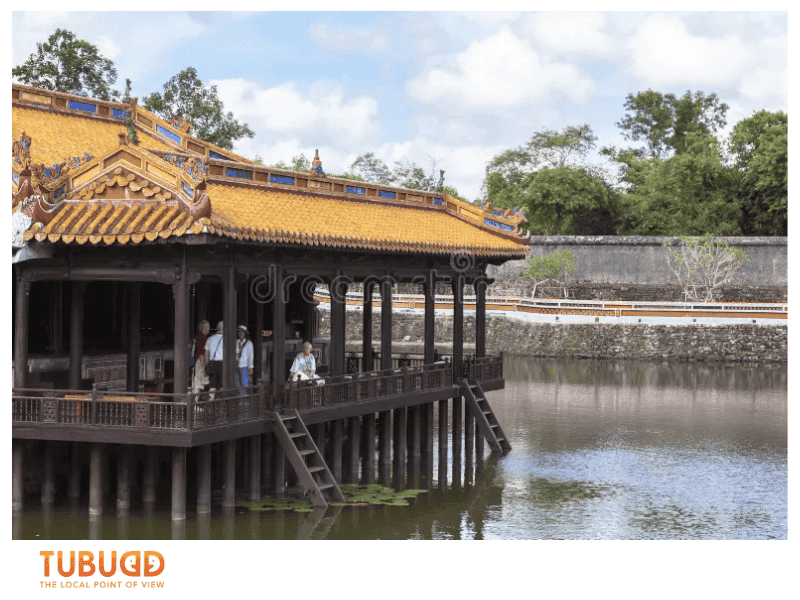
The first structures you encounter were once used by the emperor during his lifetime. These spaces hosted poetry readings, philosophical discussions, and moments of rest. Standing here, it is easy to imagine Tu Duc sitting quietly, watching reflections ripple across the lake.
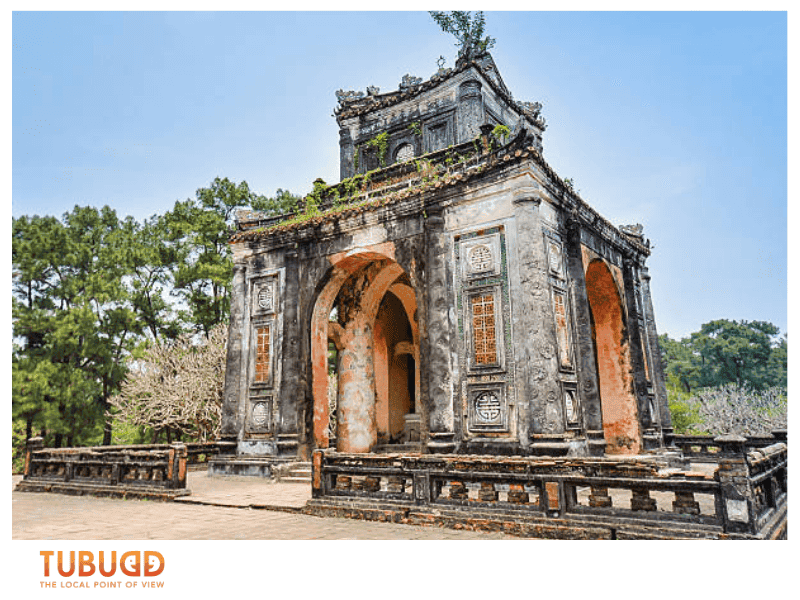
Further inside, the stone stele pavilion tells a deeply personal story. Inscribed with the emperor’s own words, it is considered one of the longest self-written epitaphs in Vietnamese history. Instead of praise, Tu Duc openly acknowledged his regrets, mistakes, and fears. This rare honesty makes the tomb emotionally powerful, even for visitors unfamiliar with Vietnamese history.
The actual burial area is intentionally understated. Unlike other tombs where the grave is central and highly visible, Tu Duc’s resting place is discreet, reinforcing the emperor’s desire for humility and contemplation rather than spectacle.
Walking through the complex, travelers often notice how silence plays a role in the experience. Even during busier hours, the space absorbs sound, allowing moments of calm reflection. This makes Tu Duc Tomb Hue particularly rewarding for travelers who enjoy history layered with emotion.
Practical Tips for Visiting Tu Duc Tomb Hue
Practical Tips for Visiting Tu Duc Tomb Hue
Visiting Tu Duc Tomb Hue is best done with intention rather than haste. Plan at least one to two hours to explore the grounds comfortably, especially if you enjoy walking and photography.
Morning visits offer cooler temperatures and softer light, which enhances the reflective quality of the site. Late afternoons can also be pleasant, though lighting becomes more dramatic and shadows longer.
Comfortable footwear is essential, as paths are long and sometimes uneven. Bring water, especially during warmer months, since the complex is spacious and shaded areas vary.
Understanding the historical and cultural context adds depth to the visit. Without guidance, many travelers miss the emotional narrative behind the architecture. This is where traveling with a Local Buddy from Tubudd can transform the experience. A local buddy can explain symbolism, translate inscriptions, and share stories that turn stone structures into living history.
Photography is allowed, but respectful behavior is expected. This is both a historical site and a spiritual resting place, so maintaining a calm demeanor enhances not only your experience but that of others as well.
Why Tu Duc Tomb Hue Is Best Experienced With Local Insight
Tu Duc Tomb Hue is not about spectacle. Its power lies in subtlety, context, and atmosphere. Travelers who rush through often leave thinking it was simply “beautiful,” while those who take time and seek understanding often describe it as moving.
Local insight bridges this gap. With Tubudd Tours or a Local Buddy, travelers gain access to stories that are not written on signs. Why certain buildings face specific directions. How Confucian philosophy shaped the design. Why Emperor Tu Duc chose poetry over power in his final years.
This deeper understanding often changes how travelers view Hue as a whole. The city stops being just an imperial capital and becomes a place of emotional complexity, shaped by rulers who were not just emperors, but human beings with doubts and dreams.
In the end, Tu Duc Tomb Hue lingers in memory not because it demands attention, but because it quietly earns it. It reminds travelers that history is not only made of victories and monuments, but also of introspection, vulnerability, and the universal search for peace.