Coconut Jelly Vietnam: The Refreshing Dessert You’ll Find Everywhere in Summer
Discover coconut jelly Vietnam style : from classic thạch dừa, rau câu dừa to layered chè and colorful jelly cups. Learn how it’s made, regional variations, best places to eat authentic coconut jelly in Hanoi and Ho Chi Minh City, and a simple home recipe.
Coconut jelly Vietnam (thạch dừa or rau câu dừa) is one of the most refreshing and beloved desserts in the country, especially during the hot months. Made from fresh coconut water or milk set into wobbly, crystal-clear cubes or layers, it offers a light, naturally sweet taste with a satisfying jelly texture.
What Makes Coconut Jelly Vietnam So Special
What Makes Coconut Jelly Vietnam So SpecialCoconut jelly Vietnam stands out because it uses real coconut water or fresh coconut milk instead of artificial flavors or heavy gelatin. The result is a clean, subtly sweet jelly that feels hydrating rather than heavy. In Vietnamese, it is called:
Thạch dừa : plain coconut jelly cubes
Rau câu dừa : coconut agar-agar jelly (rau câu is the general term for jelly made with agar powder)
Thạch trái cây dừa : fruit-embedded coconut jelly
Chè dừa : sweet soups or puddings with coconut jelly pieces
The key ingredient is agar-agar (rau câu), a seaweed-based thickener that sets at room temperature and stays firm even in tropical heat. Unlike Western gelatin, agar jelly does not melt in your mouth as quickly, giving it a distinctive bouncy bite that Vietnamese people love.
Coconut jelly Vietnam is inexpensive (usually 10,000 to 30,000 VND per serving), portable, and sold year-round, but it truly shines in summer when vendors add extra ice and fresh coconut strips.
Popular Styles of Coconut Jelly Vietnam
Popular Styles of Coconut Jelly Vietnam
Here are the most common and beloved varieties you will see across the country:
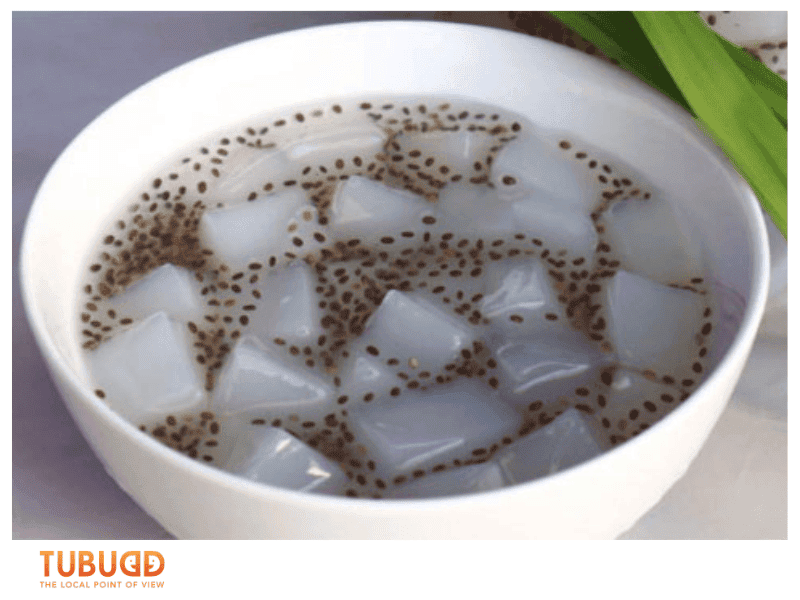
Thạch dừa trắng (plain white coconut jelly) Clear or slightly milky cubes made from pure coconut water and agar. Often served in a cup with ice and a drizzle of coconut syrup or condensed milk.
Thạch dừa lá dứa (pandan coconut jelly) Green layers from pandan extract mixed into coconut milk. Stacked in alternating white and green stripes : visually stunning and fragrant.
Thạch dừa trái cây (fruit coconut jelly) Cubes embedded with lychee, longan, jackfruit, grass jelly or red beans. Popular in southern Vietnam and often sold in colorful plastic cups.
Chè dừa non (young coconut sweet soup) Chunks of young coconut flesh and coconut jelly floating in sweetened coconut milk with pandan and crushed ice. A classic southern refreshment.
Bánh flan dừa (coconut crème caramel) Silky flan topped with coconut jelly cubes : a fusion dessert popular in cafés.
Rau câu dừa nướng (grilled coconut jelly) Rare but delicious: coconut jelly squares lightly grilled until the surface caramelizes, giving a smoky edge.
These variations show how coconut jelly Vietnam adapts to local tastes : simpler and lighter in the north, richer and fruitier in the south.
Where to Find the Best Coconut Jelly Vietnam
Where to Find the Best Coconut Jelly VietnamHanoi
Thạch Dừa Cô Hạnh (Hàng Bông) : classic plain and pandan cubes since the 1990s
Chè Dừa Bà Ba (Cầu Giấy) : rich coconut sweet soup with big jelly pieces
Thạch Trái Cây Cô Lan (Tây Hồ) : fruit-filled cups with extra coconut water
Ho Chi Minh City
Thạch Dừa Cô Ba (Quận 7) : legendary grilled coconut jelly and layered versions
Chè Dừa Non Cô Năm (Quận 3) : young coconut chunks with bouncy jelly
Hội An & Đà Nẵng night markets : pandan and fruit jelly sold in takeaway cups
Mekong Delta floating markets : fresh coconut jelly made on the spot with young coconut water
Look for stalls with a constant crowd and fresh-looking jelly : that usually means the batch is made daily.
Easy Home Recipe for Classic Pandan Coconut Jelly (Thạch Dừa Lá Dứa)
Ingredients (serves 6–8)
500 ml fresh coconut water (or 400 ml coconut milk + 100 ml water)
500ml water
10g agar-agar powder (rau câu)
100 g sugar (adjust to taste)
2–3 pandan leaves (tied in knots) or 1 tsp pandan extract
Pinch of salt
Steps
Rinse pandan leaves and bruise them to release aroma.
Combine water, coconut water/milk, sugar, salt and pandan leaves in a pot.
Bring to a gentle boil while stirring to dissolve sugar.
Slowly sprinkle in agar-agar powder while whisking constantly to avoid lumps.
Simmer 3–5 minutes until fully dissolved.
Remove pandan leaves, pour into molds or shallow trays.
Let cool at room temperature until set (about 30–60 minutes), then refrigerate.
Cut into cubes and serve with ice, extra coconut milk or fresh fruit.
Want to taste coconut jelly Vietnam made fresh by street vendors who’ve been perfecting the recipe for years? Book a Tubudd Local Buddy today. Your local friend will take you to the hidden stalls and market corners where the jelly is still set with real coconut water, show you how locals eat it (with extra condensed milk or fruit), and help you find the seasonal variations that never make it into tourist guides.