Discovering Truong Tien Bridge in Hue: Where History Crosses the River
Truong Tien Bridge is Hue’s most iconic landmark spanning the Perfume River. Discover its history, design, best time to visit, and how to experience it like a local.
Gracefully stretching across the Perfume River, Truong Tien Bridge is more than a way to cross from one side of Hue to the other. It is a symbol of the city’s identity, quietly witnessing centuries of change, from imperial times to modern Vietnam. For many travelers, Truong Tien Bridge becomes the moment when Hue truly reveals itself, calm, poetic, and deeply rooted in history.
Where Is Truong Tien Bridge and Why It Matters to Hue
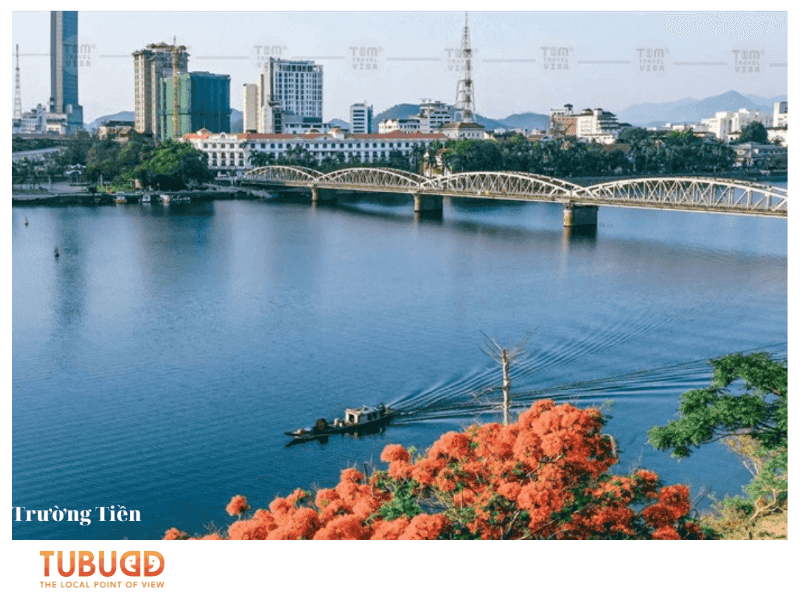
Where Is Truong Tien Bridge and Why It Matters to HueTruong Tien Bridge is located in the heart of Hue, connecting the southern and northern banks of the Perfume River. From this central position, the bridge links major streets, local neighborhoods, and key attractions, making it impossible to ignore when exploring the former imperial capital. Whether you arrive by foot, bicycle, or simply admire it from a riverside café, Truong Tien Bridge naturally draws your attention.
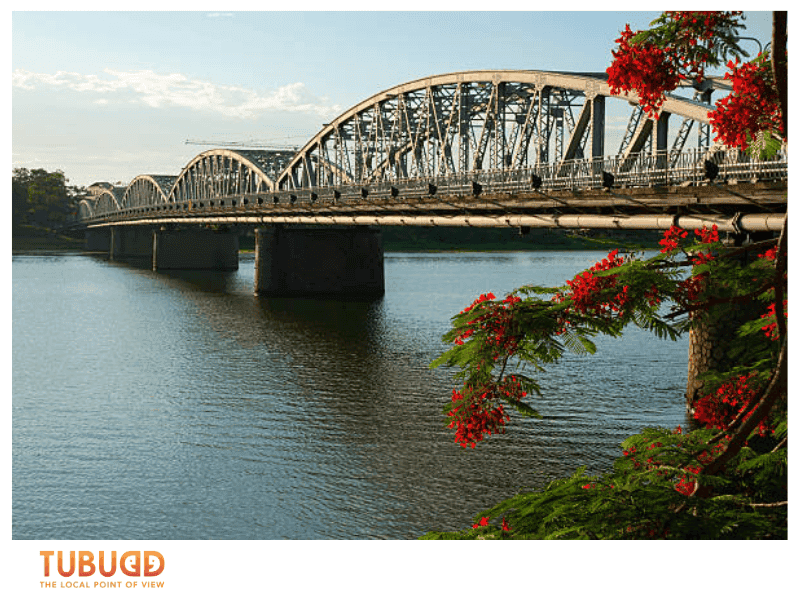
The importance of Truong Tien Bridge goes far beyond its function. Built at the end of the 19th century during the French colonial period, it was once considered a modern engineering achievement. Designed with elegant steel arches, the bridge introduced a new architectural language to Hue, blending Western technology with the city’s traditional, poetic atmosphere.
Over time, Truong Tien Bridge has become deeply embedded in the collective memory of Hue. It has survived wars, reconstructions, and political change, yet it remains a constant presence in daily life. For locals, the bridge is tied to childhood memories, evening walks, and the gentle rhythm of the river. For visitors, it serves as a visual gateway to understanding Hue’s quiet strength and enduring grace.
The History and Architecture Behind Truong Tien Bridge
The History and Architecture Behind Truong Tien BridgeTruong Tien Bridge was originally constructed between 1897 and 1899, under French colonial administration. At the time, it represented progress and modernization, connecting different parts of the city more efficiently than ever before. Its steel structure, supported by graceful arches, stood in contrast to Hue’s ancient citadel walls and wooden buildings.
Throughout the 20th century, the bridge experienced multiple phases of damage and restoration, particularly during periods of conflict. Each reconstruction added another layer to its story. Despite these changes, the bridge retained its original elegance, becoming a symbol of resilience rather than loss.
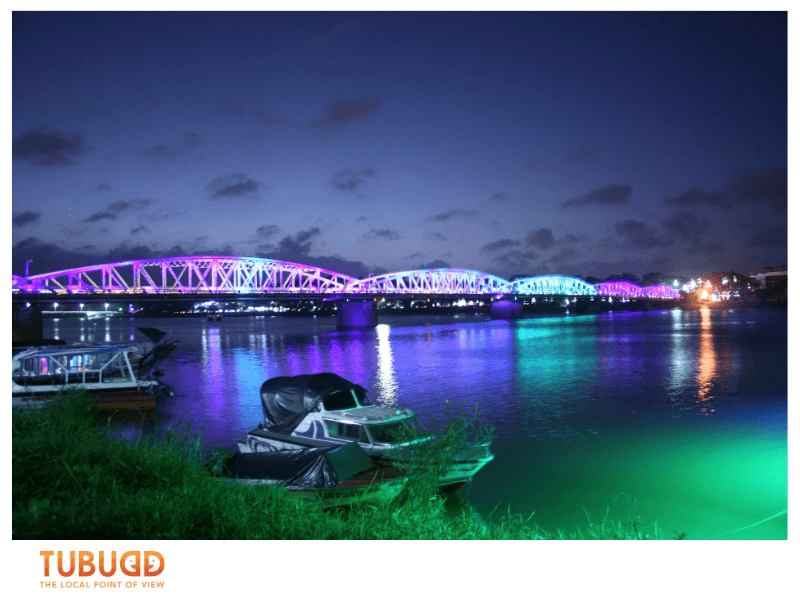
Architecturally, Truong Tien Bridge is notable for its balanced proportions and flowing lines. The arches reflect beautifully on the water below, especially during calm evenings. Today, modern lighting enhances the bridge at night, illuminating it in soft colors that shift gently and reflect on the Perfume River. This nighttime transformation has turned Truong Tien Bridge into one of Hue’s most photographed landmarks.
What makes the bridge especially meaningful is how seamlessly it fits into Hue’s overall atmosphere. Unlike grand monuments that demand attention, Truong Tien Bridge feels understated and approachable. It invites observation rather than awe, encouraging travelers to slow down and absorb the surroundings.
When and How to Experience Truong Tien Bridge
When and How to Experience Truong Tien Bridge
Experiencing Truong Tien Bridge is less about ticking off a sight and more about choosing the right moment. Early morning offers a peaceful scene, with locals cycling to work, vendors setting up stalls, and the river reflecting soft light. This is a wonderful time for quiet walks and photography without crowds.
Late afternoon and early evening are perhaps the most magical times to visit. As the sun begins to set, the bridge takes on warm tones, and the Perfume River glows gently. Locals gather along the riverbanks, couples stroll slowly, and the pace of the city softens. When night falls, the illuminated bridge becomes a focal point, creating a romantic and relaxed atmosphere.
Walking across Truong Tien Bridge allows you to experience Hue from a local perspective. From the bridge, you can look upstream toward the Imperial City or downstream toward quieter residential areas. The view captures the balance between history and daily life that defines Hue.
Combining your visit with nearby attractions enhances the experience. The bridge is close to riverside parks, night markets, and traditional cafés. Sitting nearby with a drink, watching the bridge change colors, is often more memorable than simply taking photos.
Exploring Truong Tien Bridge with Local Insight
While Truong Tien Bridge is easy to visit on your own, understanding its deeper meaning comes from local stories. Many aspects of the bridge’s role in Hue’s cultural life are subtle and easily missed without context. From its appearance in poetry and songs to its place in everyday routines, the bridge carries emotional significance that goes beyond architecture.
Exploring Truong Tien Bridge with a Tubudd Local Buddy allows you to connect these layers. A local buddy can share personal stories, explain how the bridge has changed over generations, and guide you to the best spots for viewing it at different times of day. Instead of seeing the bridge as a static landmark, you begin to understand it as part of Hue’s living identity.
A local buddy can also help you weave Truong Tien Bridge naturally into a broader exploration of Hue. Whether it is pairing the visit with a walk through the old city, a riverside food stop, or a quiet evening stroll, the experience becomes more cohesive and meaningful.
Truong Tien Bridge does not demand attention with grandeur or size. Its power lies in its presence, calm, enduring, and quietly beautiful. By taking the time to experience it thoughtfully, you gain insight into Hue itself, a city where history flows gently, much like the river beneath the bridge.