Traditional Vietnamese House in 2026: Timeless Architecture You Can Still Visit Today
Explore the traditional Vietnamese house in 2026 – from ancient courtyard homes and stilt houses to surviving examples in Hanoi, Hội An and the Mekong Delta. History, design features, and where to experience authentic architecture right now.
In 2026 the traditional Vietnamese house remains one of the most recognizable symbols of Vietnamese identity and lifestyle. Whether it is the elegant tube house of the Old Quarter, the three-compartment wooden nhà ba gian of the Red River Delta, or the elevated stilt homes of ethnic minorities, these buildings continue to tell stories of family structure, climate adaptation, and cultural continuity.
Core Types of Traditional Vietnamese House Still Standing in 2026
Vietnam’s residential architecture has always been shaped by climate, social hierarchy, and available materials. In 2026 four major forms are still clearly visible and actively used or preserved:
Core Types of Traditional Vietnamese House Still Standing in 2026
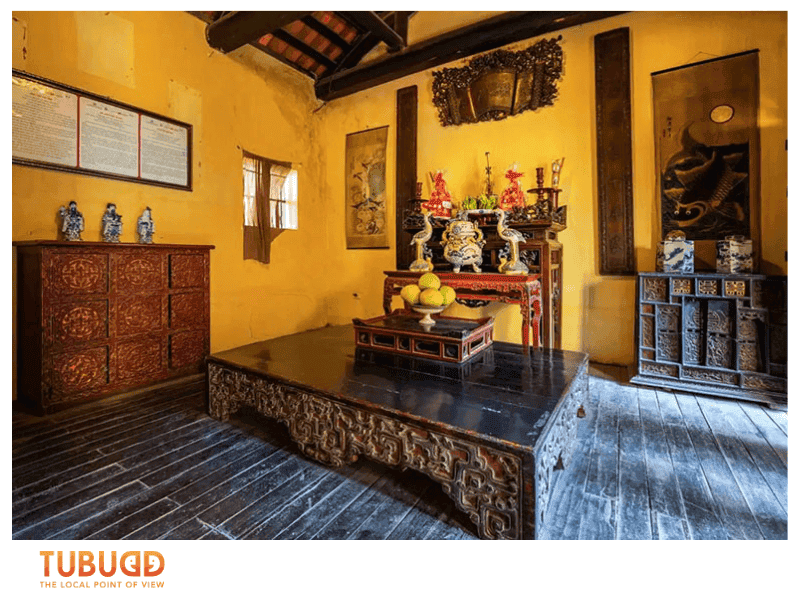
1. Nhà ba gian / nhà ba vì (three-compartment wooden house): The classic rural house of northern and central Vietnam. Usually built of ironwood or jackfruit timber, featuring three main bays, a raised wooden floor, and a large open porch (hiên). The middle compartment is the ancestor worship altar room – the spiritual heart of the family.
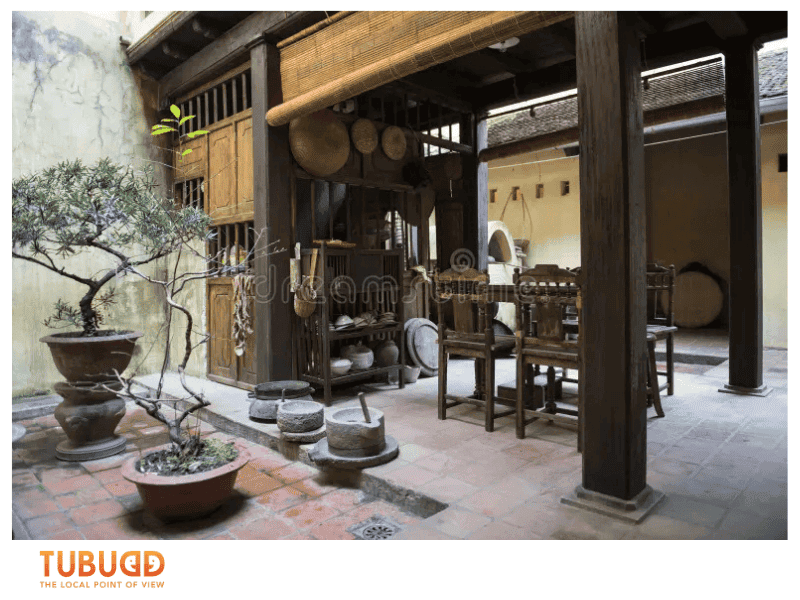
2. Nhà ống / tube house (Hanoi & Hội An style): Narrow, long buildings (often only 3–5 m wide but 30–60 m deep) designed to maximize street frontage for trade. The traditional Vietnamese house form evolved from the need to pay high taxes based on street width. Many surviving examples in the Old Quarters of Hanoi and Hội An now serve as homestays or cafés.
3. Nhà sàn (stilt house): Elevated wooden homes of ethnic groups in the northern mountains (Tày, Thái, Dao, Hmong) and Central Highlands (Ede, Bahnar). Built on stilts to protect against flooding, wild animals, and to create cool living space underneath. In 2026 many communities still live in nhà sàn while also offering homestay experiences to visitors.
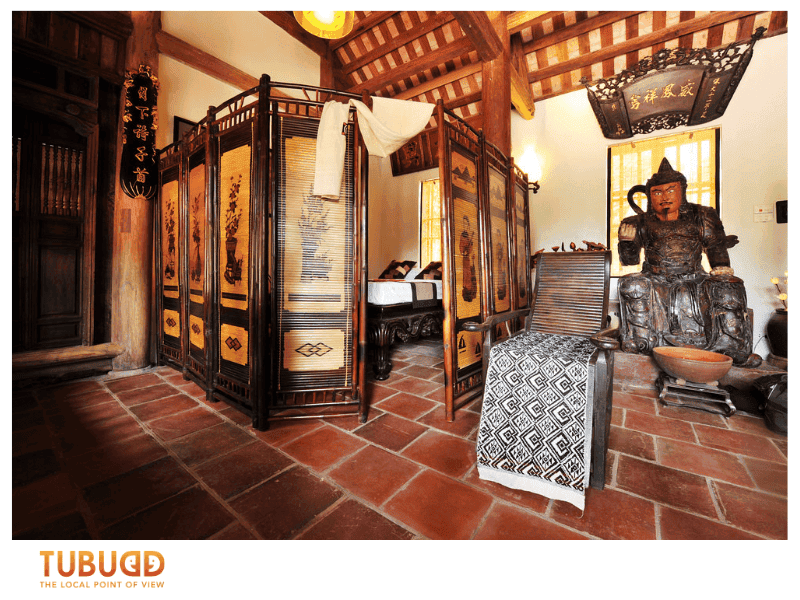
4. Nhà rường (Central Vietnam wooden house): Refined version found mainly in Huế and Quảng Nam – characterized by intricate wood carving, mother-of-pearl inlay, and very high columns. The most famous surviving examples belong to former royal officials and literati families.
Key Architectural Features of a Traditional Vietnamese House
Key Architectural Features of a Traditional Vietnamese House
Almost every traditional Vietnamese house shares several smart design solutions developed over centuries:
Raised floor / stilts → protection from flood, moisture, snakes, and better ventilation
Open layout & removable wooden walls → maximum airflow during hot humid summers
Curved “hồi văn” roof lines → rain runs off quickly; the gentle curve also believed to ward off evil spirits
Ancestor altar in the central space → spiritual core of the family; the house is first and foremost a place to honor ancestors
Yin-yang spatial balance → front public / reception area vs back private family quarters
Natural materials → ironwood, jackfruit wood, bamboo, palm-leaf thatch, laterite bricks in the south
Feng shui orientation → main door usually faces a favorable direction (south-east or south in many cases) and avoids “killing qi” alignments
Even modern concrete homes built in villages today often keep the three-bay layout and ancestor altar placement, showing how deeply rooted these principles remain.
Where to Experience an Authentic Traditional Vietnamese House in 2026
Where to Experience an Authentic Traditional Vietnamese House in 2026
Fortunately many well-preserved or lovingly restored examples are open to visitors or available as overnight stays.
Hanoi
Quán Thánh Temple area tube houses – classic narrow traditional Vietnamese house with small courtyards
Museum of Ethnology – excellent reconstructions of Tày, Thái, Hmong, and Ede nhà sàn
Hanoi Old Quarter homestays – several 100+ year-old tube houses now accept guests (look for “heritage house” listings)
Hội An
Tan Ky House – beautifully preserved merchant traditional Vietnamese house from the 19th century
Quan Thang House → another 200-year-old example with original mother-of-pearl inlay
Many Hội An homestays occupy restored tube houses with small inner courtyards
Huế & Central Vietnam
Nhà rường in Kim Long village and Phú Mậu village – several families still live in these carved wooden houses and offer tours
Bảo tàng Cổ Vật Cung Đình Huế – displays original furniture and architectural elements
Northern mountains
Mai Châu, Pù Luông, Hà Giang – Thái and Tày communities welcome overnight stays in authentic nhà sàn (usually includes home-cooked meals)
Mekong Delta
Cái Bè, Vĩnh Long floating house museums and elevated wooden homes on stilts – simpler southern variation
Why the Traditional Vietnamese House Still Matters in 2026
Despite rapid urbanization, the traditional Vietnamese house continues to influence modern living in subtle but powerful ways:
Many new suburban villas deliberately copy the three-bay layout and ancestor altar placement.
Homestay and boutique hotel owners increasingly restore old tube houses and nhà rường instead of building new concrete structures.
Younger architects and interior designers are reinterpreting elements (high ceilings, open courtyards, natural ventilation) in contemporary projects.
UNESCO and national heritage programs have placed more focus on vernacular architecture since 2023–2024, leading to better protection and documentation.
For travelers, staying one or two nights inside a real traditional Vietnamese house – listening to wooden floors creak, smelling incense from the altar, feeling the breeze through open walls – remains one of the most memorable ways to connect with Vietnamese culture.
Want to sleep inside a 150-year-old tube house in Hanoi’s Old Quarter or wake up on stilts above rice fields in Mai Châu? Book a Tubudd Local Buddy today and let a local friend arrange an authentic, low-key stay in a traditional Vietnamese house that most tourists never find. Your Buddy will also explain the family customs, help you join a home-cooked meal, and make sure the experience feels personal rather than performative.
Ready to sleep under a curved “hồi văn” roof and wake up to the sound of wooden shutters opening? Choose a Tubudd Local Buddy and turn your trip into a real connection with Vietnam’s living architectural heritage.