Where Is Thai Hoa Palace and Why Is It the Heart of Vietnam’s Imperial Citadel
Discover where Thai Hoa Palace is located, its role inside the Hue Imperial Citadel, and why this iconic hall remains the symbolic center of Vietnam’s Nguyen Dynasty heritage.
Standing at the ceremonial core of the Hue Imperial Citadel, Thai Hoa Palace is more than an architectural landmark. It is where emperors once ruled, rituals shaped the fate of a nation, and Vietnam’s imperial power was most visibly displayed.
Where Is Thai Hoa Palace Located Today
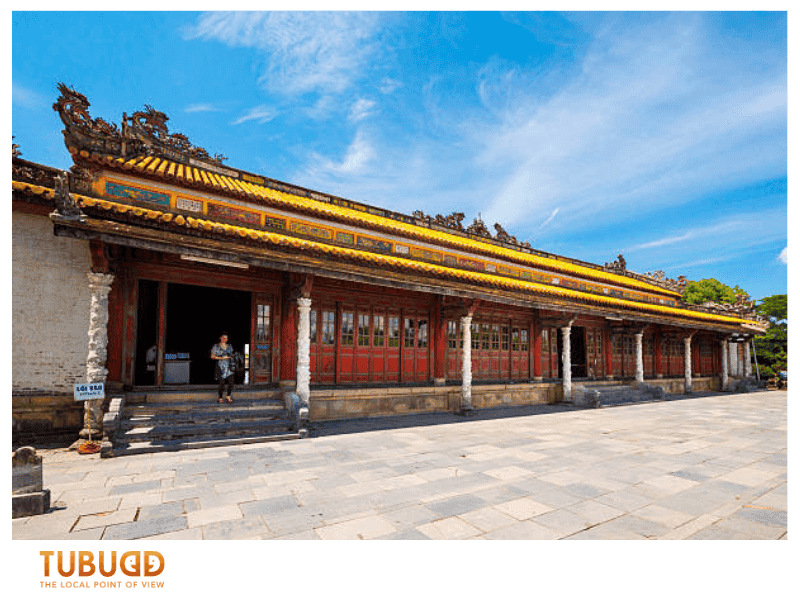
Where Is Thai Hoa Palace Located TodayThai Hoa Palace is located inside the Imperial City of Hue, in central Vietnam. Specifically, it sits along the main north south axis of the Citadel, just beyond Ngo Mon Gate, the grand southern entrance reserved for the emperor. This placement was deliberate, reflecting the palace’s supreme importance within the royal complex.
Hue itself lies along the Perfume River and served as the capital of Vietnam under the Nguyen Dynasty from 1802 to 1945. Within the Imperial City, Thai Hoa Palace occupies the most prestigious position, symbolizing political authority and cosmic order according to Confucian principles. Visitors entering the Citadel naturally arrive at Thai Hoa Palace as the focal point of their exploration.
What Thai Hoa Palace Was Used For in the Nguyen Dynasty
What Thai Hoa Palace Was Used For in the Nguyen DynastyThai Hoa Palace was the most important ceremonial hall of the Nguyen emperors. It was used for major state events such as coronations, royal birthdays, Lunar New Year celebrations, and meetings between the emperor and high-ranking mandarins.
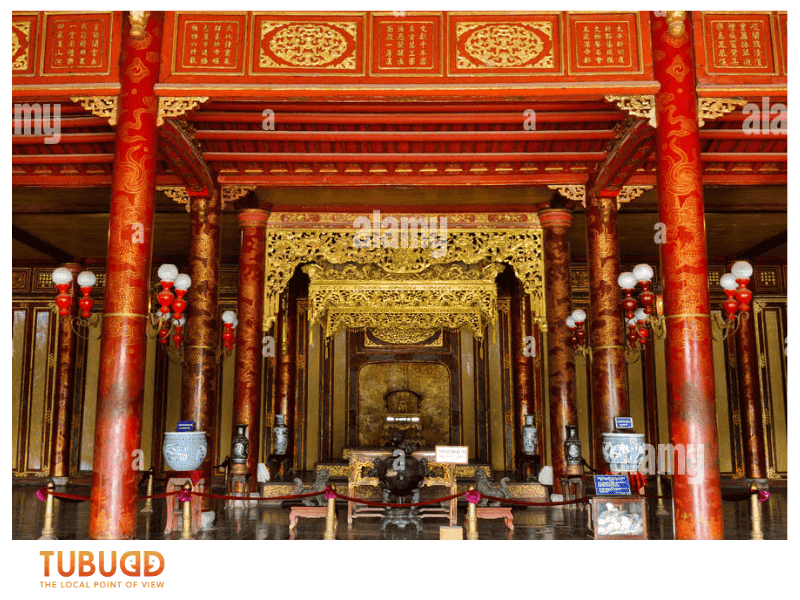
Inside the palace, the emperor’s throne was placed at the center, elevated above the court floor. Mandarins stood according to strict ranks, following precise rituals that reinforced hierarchy and loyalty. Every detail, from posture to costume, reflected the Confucian values that guided imperial governance.
Unlike residential palaces, Thai Hoa Palace was never a place of daily life. It was a stage for power, diplomacy, and legitimacy. Understanding this function helps visitors see the building not as a static monument, but as a space once filled with sound, movement, and political tension.
Architectural Highlights That Define Thai Hoa Palace
Architectural Highlights That Define Thai Hoa Palace
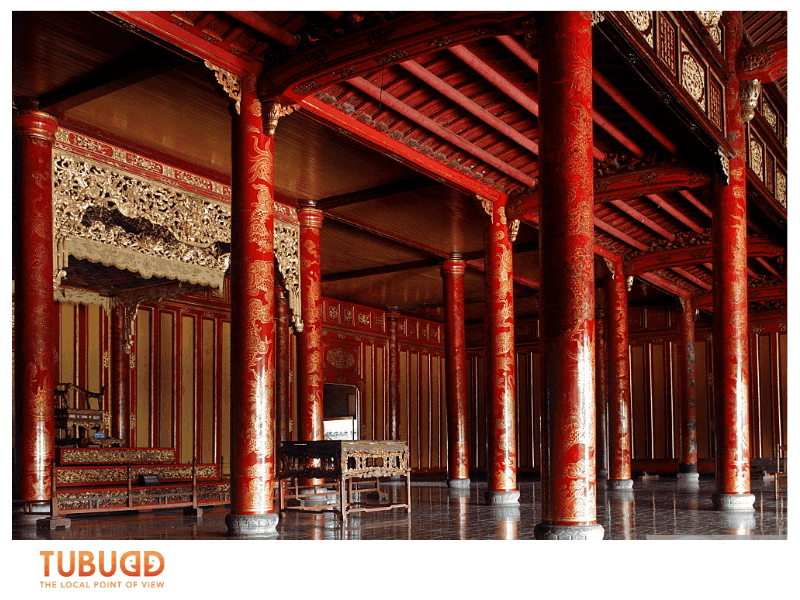
The architecture of Thai Hoa Palace reflects the highest standards of imperial design. The building rests on a raised platform and is supported by rows of massive wooden columns, each decorated with gold lacquer and dragon motifs. Dragons symbolized imperial authority and were reserved exclusively for the emperor.
The roof is covered with yellow glazed tiles, a color associated with royalty and earth in East Asian cosmology. Inside, intricate carvings depict clouds, dragons, and symbolic patterns meant to represent harmony between heaven and earth.
Although the palace suffered damage during wars, careful restoration has preserved its grandeur. Today, visitors can still sense the balance, symmetry, and solemnity that defined Vietnam’s royal court.
Why Thai Hoa Palace Matters to Vietnam’s Cultural Identity
Thai Hoa Palace is not just a remnant of the past. It represents the height of Vietnam’s last imperial dynasty and the political system that shaped the country for over a century. As part of the Complex of Hue Monuments, it is recognized as a UNESCO World Heritage Site.
For Vietnamese visitors, Thai Hoa Palace is a symbol of national memory. For international travelers, it offers insight into how Vietnam governed itself before colonial and modern eras. The palace bridges history, architecture, and philosophy in a way few sites can.
Exploring Thai Hoa Palace with context makes a significant difference. A Tubudd Local Buddy can help explain imperial rituals, symbolism, and lesser known stories that are not always clear from signage alone. This turns a visual visit into a deeper cultural experience.
Tips for Visiting Thai Hoa Palace Inside the Hue Citadel
The best time to visit Thai Hoa Palace is early in the morning or late afternoon, when the Citadel is quieter and the light softens the palace’s golden details. Comfortable walking shoes are recommended, as the Imperial City is expansive.
Photography is allowed, but respectful behavior is encouraged due to the site’s cultural importance. Reading about the Nguyen Dynasty beforehand or exploring with a local guide enhances appreciation of what you see.
For travelers seeking a more immersive experience, Tubudd Tours can combine Thai Hoa Palace with other key sites in Hue, creating a narrative journey through Vietnam’s imperial past rather than isolated stops.
Thai Hoa Palace stands as the ceremonial heart of the Hue Imperial Citadel. Knowing where it is and why it mattered allows visitors to see beyond walls and columns, and to imagine the power, tradition, and history that once defined this remarkable space.