What Are the Most Common Vietnamese Names? Origins, Meanings, and Cultural Insights
Discover the most common Vietnamese names, their meanings, origins, and why certain family and given names are so widely used in Vietnam.
The most common Vietnamese names reveal far more than identity. They reflect history, family values, language, and cultural traditions that continue to shape life in Vietnam today.
Why Are Some Vietnamese Names So Common?
Why Are Some Vietnamese Names So Common?
The question of most common Vietnamese names often begins with a surprise: compared with many countries, Vietnam has a relatively concentrated pool of family names. This means millions of people may share the same surname, even if they are not closely related.
In most common Vietnamese names, history plays a major role. Dynastic changes, migration, and political transitions all influenced naming patterns over centuries. At times, people adopted ruling family names for protection, loyalty, or social integration. This helps explain why certain surnames became dominant.
Another reason most common Vietnamese names remain widely used is the strong emphasis on ancestry. Family names are not treated as simple labels. They connect individuals to lineage, heritage, and collective identity.
If you want to understand how names connect to real family stories and cultural traditions, exploring historical neighborhoods and heritage sites with a Tubudd local buddy can offer a deeper perspective.
The Most Common Vietnamese Family Names
The Most Common Vietnamese Family
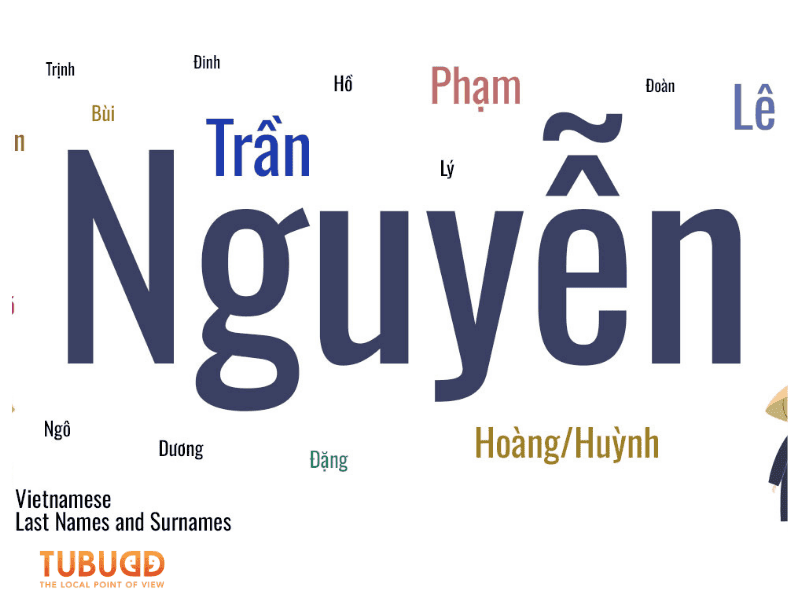
When discussing most common Vietnamese names, surnames come first.
Nguyen
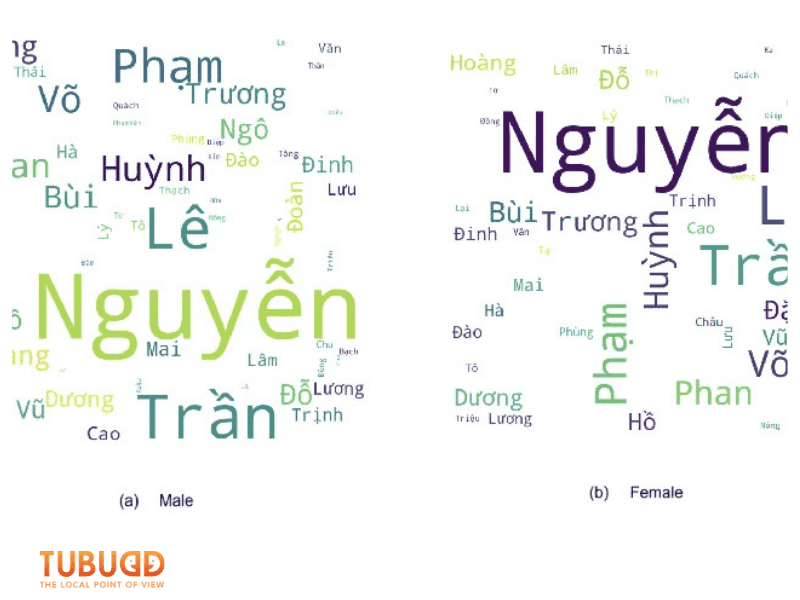
Nguyen is by far the most recognized among the most common Vietnamese names. It is estimated that a very large share of the population carries this surname.
Its prevalence is linked to historical dynasties, especially the Nguyen Dynasty, as well as earlier social shifts when people adopted the name during political transitions.
Because Nguyen is so widespread, sharing the surname does not necessarily imply close family relation.
Tran
Tran is another major name among the most common Vietnamese names. It carries strong historical association with the Tran Dynasty, a period remembered for military strength and national resilience.
Le
Le is deeply rooted in Vietnamese history and remains one of the most common Vietnamese names today. It is associated with major royal and historical legacies.
Pham
Pham is also consistently listed among the most common Vietnamese names and appears across regions of Vietnam.
Hoang and Huynh
Depending on region, Hoang and Huynh are both common. In some cases, these are related regional variants, and both appear in discussions of most common Vietnamese names.
The Most Common Vietnamese Given Names and Their Meanings
When people search most common Vietnamese names, they often want to know not just surnames, but personal names too.
Vietnamese given names often carry meaning connected to beauty, virtue, intelligence, nature, or aspiration.
Common Female Given Names
Linh often suggests spirit or delicacy.
Anh may suggest brightness or intelligence.
Huong is associated with fragrance.
Mai may evoke the apricot blossom and spring.
Lan often refers to orchid, a symbol of elegance.
These frequently appear in lists of most common Vietnamese names, especially for women.
Common Male Given Names
Minh often conveys brightness or wisdom.
Nam may reference the south or carry broader symbolic meaning.
Duc often relates to virtue.
Huy may suggest brilliance or distinction.
Tuan is often associated with refinement.
These are regularly included when discussing most common Vietnamese names for men.
How Vietnamese Names Are Structured
Understanding structure is essential when exploring most common Vietnamese names.
Vietnamese names usually follow this order:
Family name + middle name + given name.
For example:
Nguyen Van Minh
Nguyen is the family name.
Van is the middle name.
Minh is the given name.
This structure differs from many Western naming conventions.
In daily life, people are often addressed by their given name rather than surname. This surprises many visitors researching most common Vietnamese names for the first time.
Middle names can also carry meaning related to generation, family traditions, or gender patterns, though usage has evolved significantly.
Why the Most Common Vietnamese Names Still Matter Today
Why the Most Common Vietnamese Names Still Matter Today
The most common Vietnamese names are not simply historical patterns. They remain highly relevant in modern society.
Names shape introductions, social interactions, and perceptions of family background.
In professional contexts, educational settings, and government records, the structure of most common Vietnamese names continues to reflect long established conventions.
At the same time, younger generations increasingly experiment with more diverse given names while maintaining traditional surname structures.
This balance between continuity and change is part of what makes studying most common Vietnamese names so fascinating.
Regional Differences in Vietnamese Naming
Though most common Vietnamese names are shared nationally, regional patterns exist.
In northern areas such as Hanoi, some naming styles may reflect older conventions.
In southern areas such as Ho Chi Minh City, regional surname variants and naming preferences may differ.
Some names may be more common in one region due to migration history or local family networks.
These variations add another layer to understanding most common Vietnamese names beyond national averages.
Names, Identity, and Cultural Meaning
One reason interest in most common Vietnamese names continues to grow is that names reveal cultural values.
Many names reflect hopes for moral character.
Others reflect beauty, harmony, success, or resilience.
Even among the most common Vietnamese names, meaning often matters as much as sound.
This makes Vietnamese naming traditions feel deeply personal despite the prevalence of shared surnames.
For travelers, learning about names can become a doorway into understanding respect, kinship, and social customs in Vietnam.
How Common Vietnamese Names Appear in Daily Travel Experiences
Visitors often encounter most common Vietnamese names on shop signs, business cards, local introductions, and even street names connected to historical figures.
Recognizing names such as Nguyen, Tran, or Le can make everyday travel feel more culturally legible.
Rather than seeing repeated names as confusing, understanding the story behind most common Vietnamese names turns repetition into insight.
If you want to connect names with real places, family traditions, and historical context, exploring temples, old quarters, and heritage landmarks with a Tubudd local buddy can make these cultural details far more meaningful.
Conclusion
The most common Vietnamese names reflect much more than popularity. They reveal centuries of history, family structure, cultural values, and evolving identity.
From surnames such as Nguyen, Tran, Le, and Pham to meaningful given names like Minh, Linh, Mai, and Duc, the most common Vietnamese names offer a fascinating window into life in Vietnam.
Whether you encounter these names in Hanoi, Ho Chi Minh City, or rural communities, understanding them can deepen your appreciation of Vietnamese culture.
And if you want to explore the history behind these names through real places and stories, joining a Tubudd local buddy experience can help you discover Vietnam beyond the surface.